Trust wallet app is a self-custody multi-chain wallet for Web3 ownership
Self-custody multi-chain crypto wallet for storing tokens, NFTs, and accessing Web3, with in-app swaps for supported assets.
Trust wallet app is a mobile and browser wallet for holding crypto directly, managing NFTs, swapping supported tokens, staking assets, and connecting to DeFi across many networks from one interface. Its core distinction is self-custody: the wallet gives the user control of private keys and recovery access while adding market data, token conversion, Web3 browsing, and asset tools around the same account.
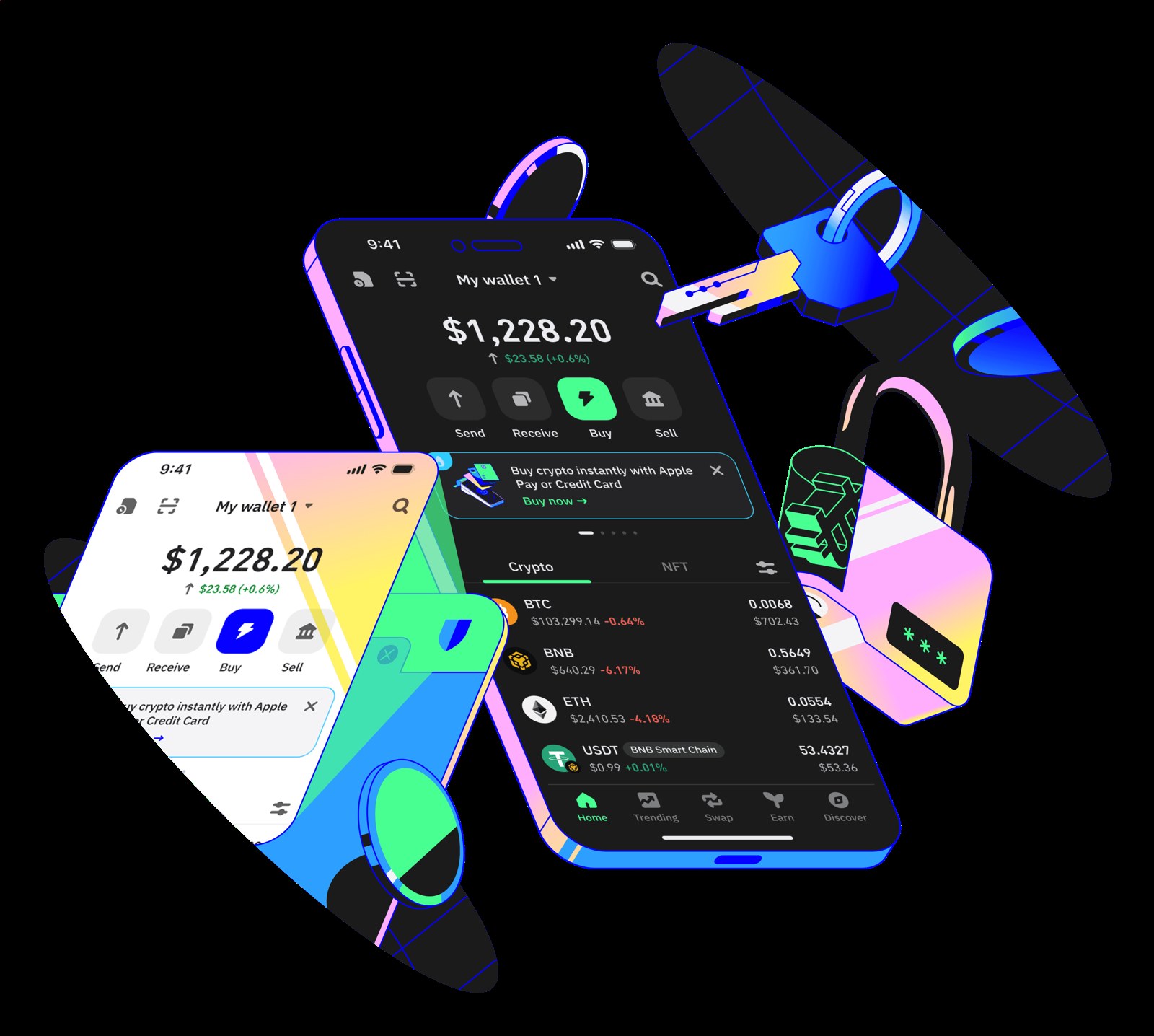
The product is best understood as a control panel for on-chain activity rather than a simple balance viewer. It supports everyday wallet tasks such as receiving Bitcoin, sending ETH, browsing NFT collections, checking live prices, and approving transactions from decentralized applications. It also extends into newer wallet categories, including smart contract wallet features through SWIFT, tokenized real-world assets, prediction markets, and perpetual futures for users who already understand those risks.
A wallet built around self-custody first
Self-custody means the account is controlled by cryptographic keys associated with the wallet, not by a traditional login. When someone creates a wallet, the recovery phrase becomes the backup for restoring access on another device. That design matters because transactions on public blockchains settle through signatures. The app prepares the transaction, displays the details, and asks the user to approve the signature before anything moves on-chain.
Trust wallet app brings that model to a broad audience by combining key management with familiar mobile navigation. The interface shows tokens, NFTs, network selections, price changes, and transaction prompts in one place. The recovery phrase still deserves offline storage, because losing it removes the practical path to restore the wallet after a phone loss or reinstall.
Where the multi-chain support shows up day to day
Multi-chain support is the reason the wallet fits so many different crypto routines. A user who holds BTC, ETH, SOL, BNB, POL, stablecoins, and NFTs does not need a separate wallet for each ecosystem. The same app organizes assets by network and routes transaction signing through the chain the asset belongs to.
This also changes how people browse Web3. A DeFi app on Ethereum, an NFT marketplace on Solana, and a token transfer on BNB Chain all require the wallet to present the right address, network, gas asset, and approval screen. Trust Wallet's value is in making those differences visible enough to act on without turning the user interface into a developer console.
Swaps, buying crypto, and token conversion in one flow
On a practical level, Trust wallet app includes swaps for supported assets, so a user can exchange one token for another from inside the wallet instead of copying addresses between services. The app shows the token pair, route details, estimated output, and network fee before approval. Those details matter because a swap is an on-chain transaction, and the final result depends on liquidity, price movement, gas, and the chain used for settlement.
Buying crypto inside the app serves a different purpose. It gives a starting point for users who need an asset before they interact with a network. After purchase, the asset arrives in the self-custody wallet, where it can be held, sent, swapped, staked when supported, or used with decentralized applications. The converter and live market data round out the same workflow by helping users understand values before they act.
NFTs and collectibles without leaving the account view
NFT support turns the wallet into more than a list of fungible token balances. It displays collectibles associated with supported networks, which helps users confirm ownership and track items received from mints, marketplaces, games, and community campaigns. The asset still lives on-chain; the wallet provides the view, metadata display, and transaction signing path.
That said, Trust wallet app is especially useful when NFTs are part of a broader Web3 routine. A user might hold a profile picture collection, a game item, a membership pass, and a small balance of the chain's gas token in the same account. Keeping those pieces together makes approval prompts easier to interpret because the user sees both the collectible and the wallet state around it.
Staking and network rewards inside a self-custody setup
Staking in Trust Wallet connects supported proof-of-stake assets to validators or staking mechanisms that help secure their networks. The user keeps wallet-level custody while delegating or staking according to the rules of the specific chain. Rewards, lock periods, unstaking times, and validator choices differ by asset, so the app's role is to expose the available action and submit the signed transaction.
This feature is strongest for people who already plan to hold a staking-compatible asset and want the process near their main wallet. It keeps the experience closer to normal wallet management: choose the asset, review the staking action, approve the transaction, and monitor the position from the account view.
SWIFT and account abstraction for easier Web3 actions
SWIFT is Trust Wallet's smart contract wallet experience, built around account abstraction. In plain terms, it uses smart contract account features to make Web3 actions feel less rigid than older wallet flows. Account abstraction is important because it supports more flexible transaction handling, which helps wallets improve onboarding, recovery patterns, fee handling, and dApp interactions over time.
More broadly, Trust wallet app uses this direction to serve users who want self-custody with fewer manual steps. The broader Web3 market is moving from raw address management toward wallets that feel more like account software while still signing blockchain transactions. SWIFT belongs to that shift, alongside the mobile app and browser extension.
Security habits that matter with a self-custody wallet
The main security boundary is the recovery phrase and the device that signs transactions. Store the phrase offline, separate it from screenshots and cloud notes, and test any large transfer with a small transaction first. Approval prompts also deserve attention because token approvals give smart contracts permission to interact with specific assets.
A practical wallet routine includes a few repeatable checks:
- Confirm the network before sending or swapping an asset.
- Keep enough native gas token for transaction fees.
- Read token approval screens before signing.
- Use the browser extension only with sites you intended to open.
- Separate long-term holdings from experimental dApp activity.
These habits protect the user from common mistakes without changing how the wallet works. Trust wallet app supplies the interface and signing tools; the final approval still comes from the person holding the keys.

Mobile app, browser extension, and developer ecosystem
The mobile app is the most recognizable version because it puts Web3 activity in a phone-first layout. The browser extension gives desktop users a way to connect with dApps in a more traditional web environment. Together, they cover the two places many crypto users spend time: mobile account management and desktop Web3 sessions.
Day to day, Trust Wallet also maintains developer-facing pieces, including Wallet Core, an open-source mobile-focused wallet library. That matters because wallet infrastructure extends beyond one consumer interface. Developers building crypto applications need predictable signing, asset handling, and chain support, while users benefit when the wallet ecosystem stays compatible with the applications they actually use.
When another wallet format makes sense
Importantly, Trust wallet app fits users who want a broad multi-chain wallet with swaps, staking, NFTs, market tools, and Web3 access in one product. MetaMask remains a common choice for Ethereum Virtual Machine networks and developer-heavy DeFi workflows. Phantom is closely associated with Solana activity and a polished NFT experience. Ledger Live pairs with Ledger hardware devices for people prioritizing offline key storage.
The right choice depends on the primary chain, signing habits, and storage style. A phone-based self-custody wallet handles daily Web3 activity well. A hardware wallet works better for assets intended to sit untouched for long periods. Many experienced users combine both: one wallet for active transactions and another for deeper storage.
What to know about Trust wallet app
- Does Trust Wallet charge its own fee for sending crypto?
- Network transactions require gas or miner fees paid to the blockchain being used, such as ETH on Ethereum, SOL on Solana, BNB on BNB Chain, or POL on Polygon. Trust Wallet displays estimated costs before approval. Swap and purchase flows also include pricing from liquidity routes or payment providers, so the total cost is visible before the user signs or confirms the action.
- Can I use the same Trust Wallet account on a new phone?
- Yes. Restoring the wallet on a new phone requires the recovery phrase created with the original wallet. Once restored, the app derives the same blockchain accounts and shows assets tied to those addresses. The recovery phrase should be entered only inside the wallet restoration flow and kept offline after setup, because anyone with it controls the wallet.
- Which chains are most relevant for Trust Wallet users?
- The wallet is designed for broad multi-chain use, so common networks include Bitcoin, Ethereum, Solana, BNB Chain, Polygon, and other ecosystems supported in the app. The important detail is matching the asset to its network before sending funds. A USDT balance on one chain is not the same on-chain object as USDT issued on another chain.
- Do I need the browser extension if I already use the mobile app?
- The browser extension is useful when interacting with desktop DeFi apps, NFT marketplaces, analytics tools, or Web3 games from a computer. The mobile app is enough for many sending, receiving, swapping, staking, and portfolio checks. Users who split activity between phone and desktop benefit from having both formats available, as long as they manage recovery access carefully.
- What happens if a token does not appear after receiving it?
- The asset might be on a different network, use a token contract that needs manual display, or require the app to refresh balances. First check the receiving address and chain used for the transfer. If the transaction settled on-chain, the wallet address owns the token even when the interface needs help displaying it. Adding the correct token details often fixes the view.
- Is Trust Wallet good for NFTs as well as tokens?
- Yes, it supports NFT viewing and management on supported networks, which makes it useful for collectibles, mint receipts, membership items, and game assets. The wallet shows the NFT alongside fungible token balances, helping users see the gas token and collectible in the same account. NFT transfers still require the correct network and a signed transaction.
- Can Trust Wallet connect to DeFi apps?
- Yes. It connects to supported decentralized applications through mobile Web3 browsing or the browser extension. The wallet signs actions such as swaps, token approvals, staking interactions, and marketplace transactions. Before signing, review the requested permission, asset, network, and fee. A DeFi connection should match the site and action the user intentionally opened.