Trust wallet app is a self-custody Web3 wallet with SWIFT smart-account access
Self-custody multi-chain crypto wallet for managing Web3 assets, with SWIFT smart contract wallet features for staking, swaps, and NFTs.
Trust wallet app is a mobile-first crypto wallet for holding private keys, using DeFi, collecting NFTs, swapping tokens, staking supported assets, and entering Web3 without handing custody to an exchange account. Its most distinctive layer is SWIFT, a smart contract wallet experience that brings account abstraction features into Trust Wallet, so users manage assets across chains with a simpler signing flow and broader on-chain access from one app.
On a practical level, Trust Wallet is built around ownership of the recovery phrase and private keys. The app gives the user a local wallet interface, while the assets themselves remain on networks such as Bitcoin, Ethereum, BNB Smart Chain, Solana, Tron, Polygon, Arbitrum, Optimism, Base, Avalanche, and Cardano. That structure matters because balances, NFT records, staking positions, and token approvals live on public blockchains rather than inside the application database.
The SWIFT smart wallet layer changes everyday Web3 actions
SWIFT is Trust Wallet's account abstraction path for people who want fewer rough edges when using decentralized applications. A traditional externally owned account signs each action directly with a key. A smart contract wallet adds programmable account logic, which supports cleaner transaction flows, more flexible fee handling, and security features that ordinary seed-only wallets struggle to provide.
For a user, the visible difference is less about the engineering term and more about the experience: Web3 actions feel closer to managed app interactions while still settling on-chain. Trust wallet app uses this to make swaps, dApp sessions, and asset movement less fragmented across networks. Gas, signatures, approvals, and transaction status remain important, but SWIFT reduces the sense that every small task requires a separate technical decision.
Multi-chain asset management inside one portfolio view
A major reason people choose Trust wallet app is that it handles many asset types without forcing every chain into a separate wallet. Bitcoin holdings, Ethereum ERC-20 tokens, BNB Smart Chain BEP-20 tokens, SPL tokens on Solana, TRC-20 tokens on Tron, and NFTs appear inside a unified portfolio. The wallet also supports watching market prices and converting crypto values into local currency units for easier position tracking.
This multi-chain design is practical for users who receive assets from exchanges, bridges, games, NFT marketplaces, staking rewards, and DeFi protocols. A token transfer still has to use the right network; sending USDT on Tron differs from sending USDT on Ethereum. The app helps display the network context, but the sender must choose the chain that matches the receiving address and asset standard.
Buying, swapping, and bridging from the app screen
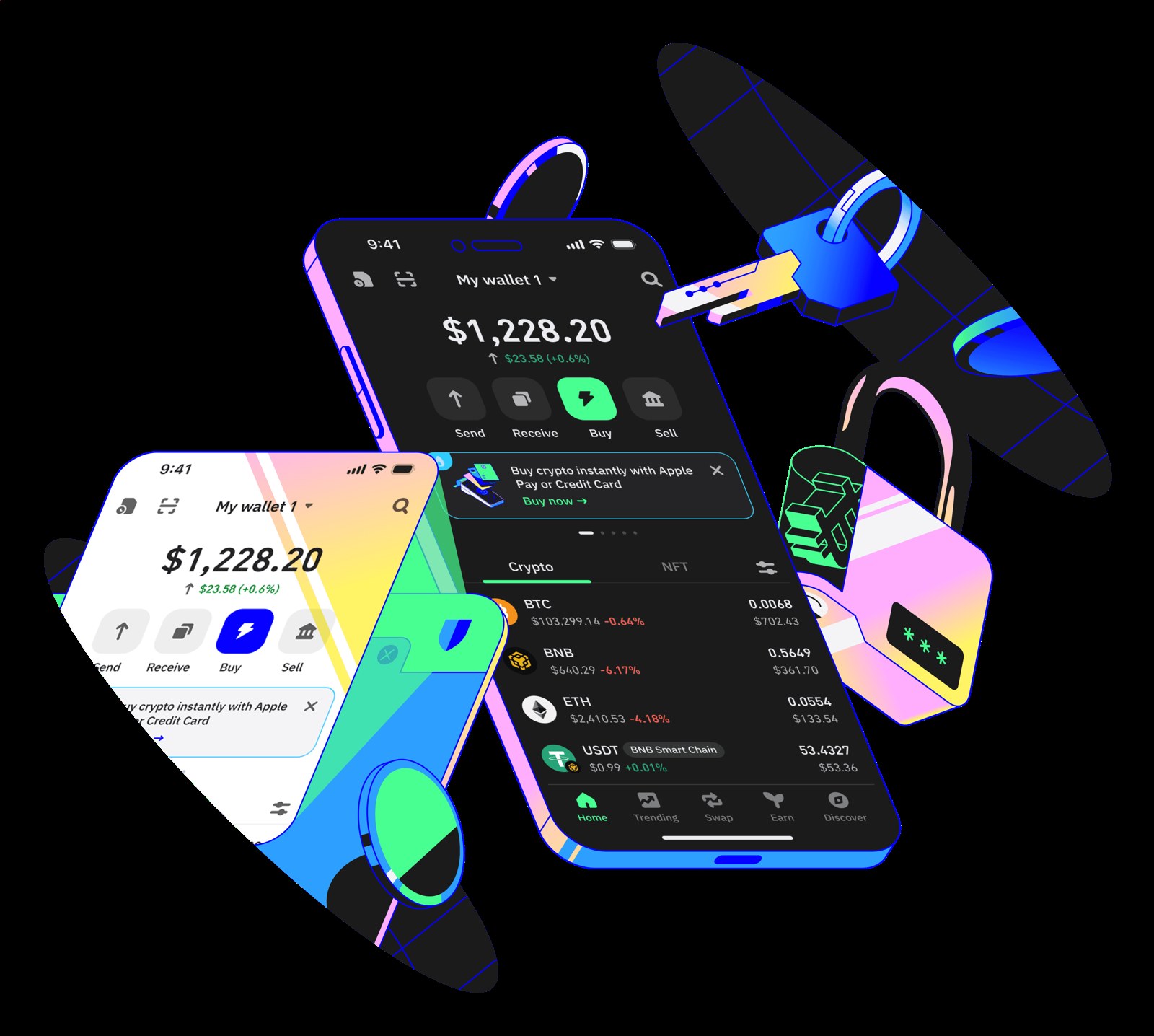
Trust wallet app includes buy and swap flows so a user does not have to leave the wallet for every transaction. Buy features connect to payment providers, while swaps route through supported liquidity sources and networks. The wallet interface presents the quote, asset pair, destination network, estimated charges, and signing step before the transaction is sent.
Every on-chain transaction includes network economics. Ethereum gas is paid in ETH, BNB Smart Chain gas in BNB, Solana fees in SOL, Tron fees through TRX resources or fees, and Polygon fees in POL. Swap pricing also reflects liquidity, price impact, and any provider costs shown in the transaction screen. Reading the confirmation panel before signing prevents the most common mistake: approving the right asset on the wrong network.
Staking turns supported coins into network participation
Staking in Trust Wallet is designed for proof-of-stake networks where token holders delegate or stake assets to help secure a blockchain. The exact mechanics vary by chain. Some networks use validator delegation, some apply unbonding periods before withdrawals, and some distribute rewards on a schedule set by protocol rules rather than by the wallet interface.
The app makes staking easier to manage because balances, validator choices, pending rewards, and unstaking actions sit close to the rest of the portfolio. Trust wallet app does not turn staking into a fixed-income product; rewards come from network rules, validator performance, and protocol conditions. A user comparing options should check the chain, lockup terms, reward token, and validator details inside the staking flow before confirming.
NFTs, RWAs, perps, and prediction markets extend the wallet beyond storage
Modern wallet usage reaches well past sending and receiving coins. Trust Wallet presents NFTs for supported chains, connects to decentralized applications, and includes access points for tokenized real-world assets, perpetual futures, and prediction markets. These features make the wallet a control panel for Web3 activity rather than a passive balance viewer.
That wider surface also creates more signing decisions. NFT listings, token approvals, perpetual futures collateral, and prediction market positions each involve different risks and transaction permissions. The safest habit is to treat every signature as an instruction to the blockchain, not as a routine login click. If an approval grants broad token access, revoking old permissions after the activity is finished keeps the account cleaner.
Getting started with the mobile app without losing the recovery path
Download the official mobile app, create a new wallet, and write down the recovery phrase in the exact order shown. A recovery phrase for common wallet standards contains 12, 15, 18, 21, or 24 words. Store it offline, away from screenshots, cloud notes, email drafts, and chat apps. Anyone who obtains it controls the assets associated with that wallet.
After setup, add networks and tokens that match the assets you plan to use. A small first transfer is the cleanest way to confirm the address, network, and receiving wallet before sending a larger amount. Users moving funds from an exchange should match the withdrawal network to the wallet network shown in Trust wallet app and keep enough native coin for gas on the receiving chain.
Browser extension access for desktop dApps
That said, Trust Wallet also offers a browser extension for people who interact with desktop Web3 applications. The extension connects to dApps from a browser session, while the mobile app remains the stronger fit for scanning, quick transfers, NFT viewing, and on-the-go portfolio management. Together, the two surfaces cover the most common patterns: mobile custody and desktop DeFi access.
Desktop use introduces familiar wallet hygiene issues. Check the dApp name, review the requested permissions, and separate high-value long-term holdings from experimental DeFi activity. A dedicated wallet for new protocols keeps approvals, test transactions, and unfamiliar contracts away from core holdings. Trust wallet app supports this style of separation because users can create or import multiple wallets inside the same interface.

Privacy and security depend on custody habits
Self-custody gives the user direct control, and that control brings direct responsibility. Trust Wallet emphasizes private access, local key control, and security education, but the strongest protections come from how the wallet is used. Keep the recovery phrase offline, use device-level protections, avoid unknown downloads, and pause when a transaction asks for unlimited approval or unexpected asset movement.
Scams target urgency, fake support, airdrop claims, wallet-draining approvals, and copied interface designs. Official support staff do not need a recovery phrase to solve an account issue. If a site asks for those words, it is asking for ownership. The same rule applies to private keys and secret backups, regardless of whether the request appears inside a form, direct message, or browser prompt.
MetaMask, Coinbase Wallet, Ledger, and Phantom as real alternatives
Choosing a wallet is partly about chains and partly about behavior. MetaMask has deep Ethereum and EVM dApp support, Coinbase Wallet pairs self-custody with a familiar exchange-adjacent brand, Ledger uses hardware signing for stronger key isolation, and Phantom is especially strong for Solana while also supporting additional networks. Trust wallet app stands out when a user wants a broad mobile portfolio, built-in Web3 access, staking, swaps, NFTs, and SWIFT smart wallet features in one place.
The best fit changes with the job. Hardware storage suits larger long-term holdings, a browser-heavy DeFi routine favors extension-first wallets, and Solana-heavy NFT activity benefits from Solana-native tooling. Trust Wallet is strongest as a general-purpose multi-chain app for people who want one self-custody home for many networks and Web3 actions.
Frequently asked questions about Trust wallet app
- Does the Trust wallet app charge a monthly fee?
- No monthly subscription is required to use the wallet itself. Costs appear when you perform on-chain actions, such as sending tokens, swapping, staking, minting NFTs, or interacting with dApps. Those costs include blockchain network fees and any provider or routing charges shown in the transaction screen. The native gas token depends on the network, such as ETH for Ethereum, BNB for BNB Smart Chain, SOL for Solana, TRX for Tron, and POL for Polygon.
- Can I import an existing recovery phrase into the Trust wallet app?
- Yes. The app supports importing an existing wallet with a valid recovery phrase or private key format used by supported networks. Importing does not move assets; it simply gives the app access to addresses already controlled by that secret. Enter the phrase only inside the official wallet interface on a device you control, because anyone who sees the words has the same ability to spend the funds.
- Which devices work with the Trust wallet app?
- The mobile app is designed for iOS and Android devices, while the browser extension serves desktop Web3 sessions. The mobile version is the main choice for everyday portfolio viewing, token transfers, NFT access, and QR-based flows. The extension is better for dApps built around desktop browser connections. Users who work across both environments should keep device security, wallet backups, and extension permissions consistent.
- Recovering access after deleting the Trust wallet app, what do I need?
- You need the recovery phrase or private key connected to the wallet. Deleting the app does not delete assets from the blockchain, but it removes the local interface that was holding access. Reinstalling and importing the correct phrase restores the wallet addresses. Without that backup, the app provider cannot reset access, recover a forgotten phrase, or move funds on behalf of the owner.
- Is SWIFT in Trust Wallet useful for a beginner?
- SWIFT is useful when a beginner wants a simpler smart-account experience for Web3 activity. It brings account abstraction features into the wallet flow, reducing some friction around signatures, gas handling, and dApp interaction. Beginners still need to understand transaction approvals, network choice, and recovery backups. SWIFT improves the account experience, but it does not remove the need to review what each transaction asks the wallet to sign.
- Why does a token show a balance but fail when I try to send it?
- A send failure usually means the wallet lacks the native gas token for that network, the token is on a different chain than expected, or the transaction parameters changed before confirmation. For example, holding an ERC-20 token on Ethereum still requires ETH for gas. A token on BNB Smart Chain needs BNB. Check the asset network, keep a small gas balance, and confirm that the recipient address supports the same chain.